Substation commissioning and acceptance testing is the structured verification that every component of a new or modified substation – transformers, switchgear, instrument transformers, protection, control and grounding – is installed correctly, performs to specification and is safe to energize. Performed per ANSI/NETA ATS (Acceptance Testing Specifications) and applicable IEEE standards, commissioning is the difference between an energization based on evidence and one based on hope.
What is verified during commissioning
A complete acceptance campaign covers the full chain of substation assets: power transformers (turns ratio, winding resistance, insulation resistance, power factor, excitation current); circuit breakers (timing, travel, contact resistance, insulation); disconnect switches and bus (contact resistance, torque verification); instrument transformers (ratio, polarity, burden, saturation for CTs; ratio and polarity for VTs); protection relays (settings verification and secondary injection); control and interlocking logic (functional tests of every trip, close and transfer path); grounding system (grid resistance and continuity); and cables (insulation and withstand tests). Each test has defined acceptance criteria in ANSI/NETA ATS tables.
The commissioning process
Effective commissioning is a project discipline, not just a set of measurements: document review of drawings, settings files and factory test reports; development of the inspection and test plan (ITP) with hold points; visual and mechanical inspections; individual component testing; functional and interlock testing as an integrated system; energization plan with step-by-step switching and verification; and final documentation package. Skipping steps is how latent defects reach service – a wiring error in a CT circuit or an untested trip path can hide for years until it fails during a real fault, when it matters most.
Maintenance testing of existing substations
The same test portfolio, applied per ANSI/NETA MTS (Maintenance Testing Specifications), verifies substations already in service: benchmarking asset condition, catching degradation trends, and validating repairs. Periodic testing combined with infrared thermography and oil analysis forms the backbone of a substation reliability program.
Standards and equipment
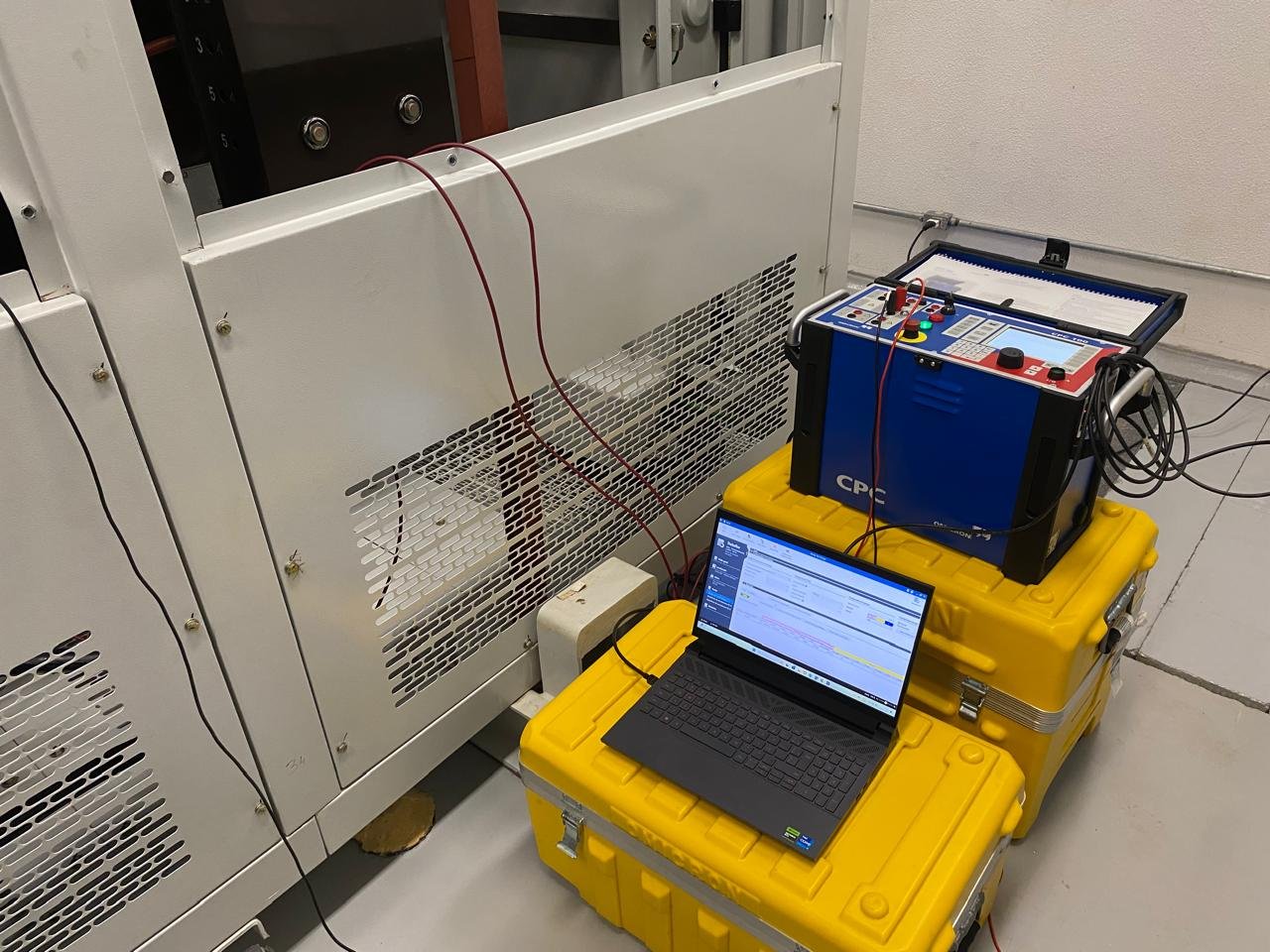
Testing per ANSI/NETA ATS and MTS, IEEE C57 family for transformers and IEEE C37 family for switchgear. Core platform: OMICRON CPC 100 multifunction primary test set with accessories for ratio, resistance, impedance and primary injection, complemented by insulation and power factor test systems.
What you receive
A commissioning dossier: complete test records per asset with acceptance criteria comparison, punch list with classification, settings as-left documentation, energization checklists and a final report signed by the responsible engineers – the document set your insurer, lender and operations team will ask for.
Experience up to 500 kV
Tecnvolt has commissioned and tested substations from industrial MV facilities to 500 kV transmission substations, including work for major oil and gas and infrastructure clients across Brazil since 2012. ISO 9001, ISO 14001 and ISO 45001 certified.
Frequently asked questions
How long does substation commissioning take? From a few days for a simple MV substation to several weeks for HV yards – driven by asset count, complexity of protection schemes and outage logistics. A realistic ITP defined early prevents schedule surprises.
Can you test with partial outages? Yes – test sequencing can be organized bay by bay to match outage windows, provided isolation and safety boundaries are respected.
Do you verify protection settings? Yes – settings files are compared against the coordination study, and secondary injection verifies pickup, timing and trip paths for each function tested.
About our U.S. transition
Tecnvolt Engenharia is a Brazilian company founded in 2012, currently in the process of establishing a U.S. company in Houston, Texas. During this transition we are receiving inquiries and scheduling future work. Request a quote / register interest