
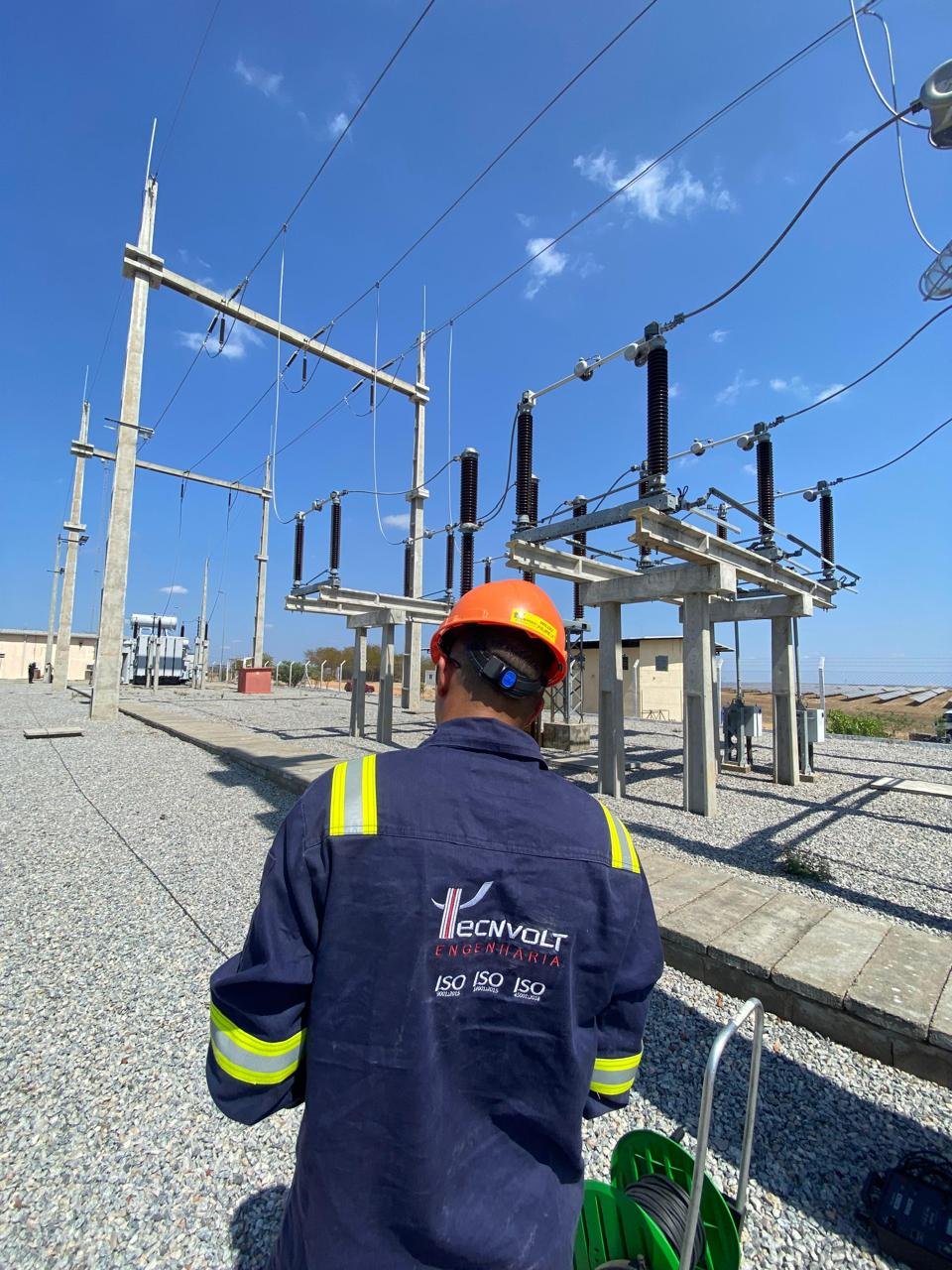
The grounding system is the silent foundation of electrical safety: it limits touch and step voltages during faults, provides the return path that lets protection operate, and protects people, equipment and structures. Yet it is buried, invisible and degrading – corrosion, broken conductors, stolen copper and soil changes all erode a grid over time. Grounding system testing verifies, with measurements, that the design assumptions still hold. Tecnvolt performs grounding measurements per IEEE 81 and evaluates results against IEEE 80 criteria for substations.
What we measure
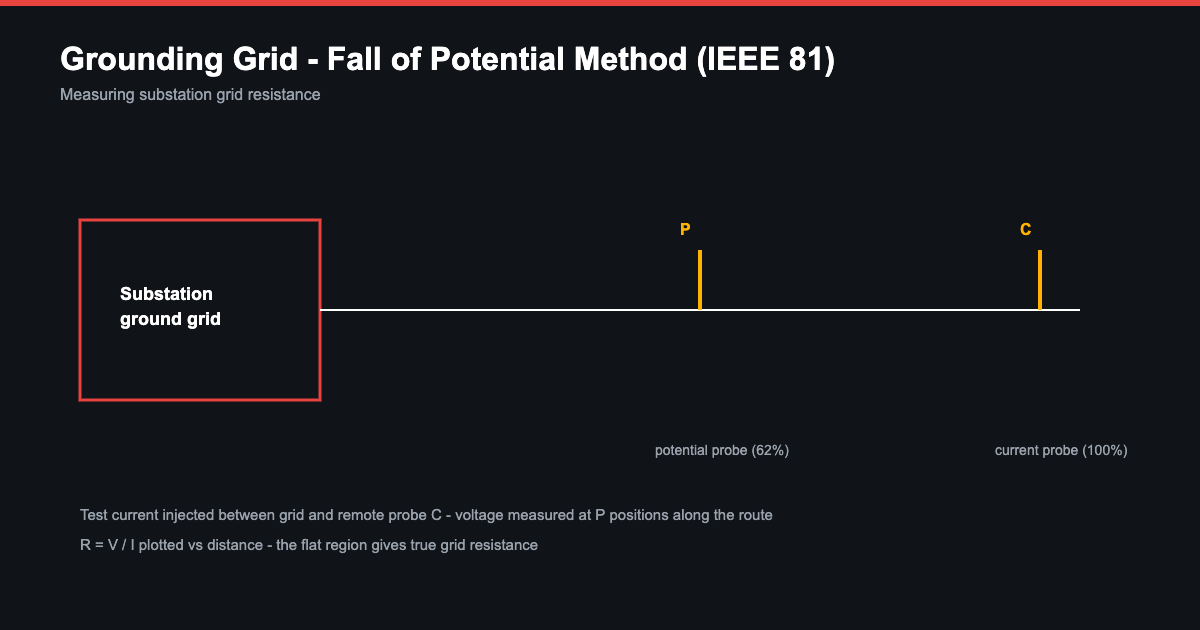
Grid resistance by fall-of-potential (IEEE 81), with test leads and probe placement engineered for the substation size – shortcuts here produce numbers that look precise and mean nothing. Soil resistivity by Wenner four-point method, the input for any grounding design or verification model. Continuity of connections between equipment, structures and the grid using micro-ohmmeter measurements – a disconnected surge arrester ground or transformer neutral is a severe hidden hazard. Touch and step voltages evaluated against IEEE 80 limits, by measurement and/or modeling from measured data.
Why periodic verification matters
A grounding grid that passed at commissioning is not guaranteed to pass today. Copper theft, corrosion in aggressive soils, plant expansions that changed fault levels, and new interconnections all shift the safety margin. IEEE 80 touch and step limits depend on fault current and clearing time – if the upstream network got stronger or protection got slower, yesterday-compliant can be today-dangerous. Periodic measurement, trended over campaigns, is the only evidence-based answer.
Typical applications
Substation commissioning baseline per ANSI/NETA ATS; periodic audits of industrial plants, ports and utility substations; verification after expansions, retrofits or copper theft events; lightning protection system (LPS) ground verification; and forensic measurement after electrical accidents or equipment damage attributed to grounding.
What you receive
A grounding assessment report: measured grid resistance with method and probe geometry documented, soil resistivity profile, continuity results per connection point, touch and step evaluation against IEEE 80, comparison with previous campaigns, and prioritized corrective recommendations with estimated risk reduction.
Why Tecnvolt
Tecnvolt has verified grounding systems from industrial facilities to 500 kV substations since 2012, integrating grounding measurements into commissioning and maintenance campaigns. ISO 9001, ISO 14001 and ISO 45001 certified.
Frequently asked questions
Does grounding measurement require an outage? Grid resistance and soil resistivity are normally measured with the installation in service, under controlled procedures. Continuity checks on specific equipment may require local isolation.
How often should grounding be verified? Every 3 to 5 years for critical substations, and always after events – expansion, theft, lightning damage or accidents.
Our substation is compact and urban – can fall-of-potential still be used? With engineered probe routing, coupling corrections or alternative methods, valid measurements are achievable even in constrained sites; the report documents the method and its limits.
About our U.S. transition
Tecnvolt Engenharia is a Brazilian company founded in 2012, currently in the process of establishing a U.S. company in Houston, Texas. During this transition we are receiving inquiries and scheduling future work. Request a quote / register interest