
Protection system testing answers the question that matters most in any electrical installation: if a fault happens right now, will the protection actually trip? Relays, instrument transformers, wiring and breakers form a chain – and the chain is only proven by testing it end to end. Tecnvolt performs protection and secondary injection testing with the OMICRON CPC 100 multifunction platform, per ANSI/NETA specifications and IEEE C37 practice.
Instrument transformer testing
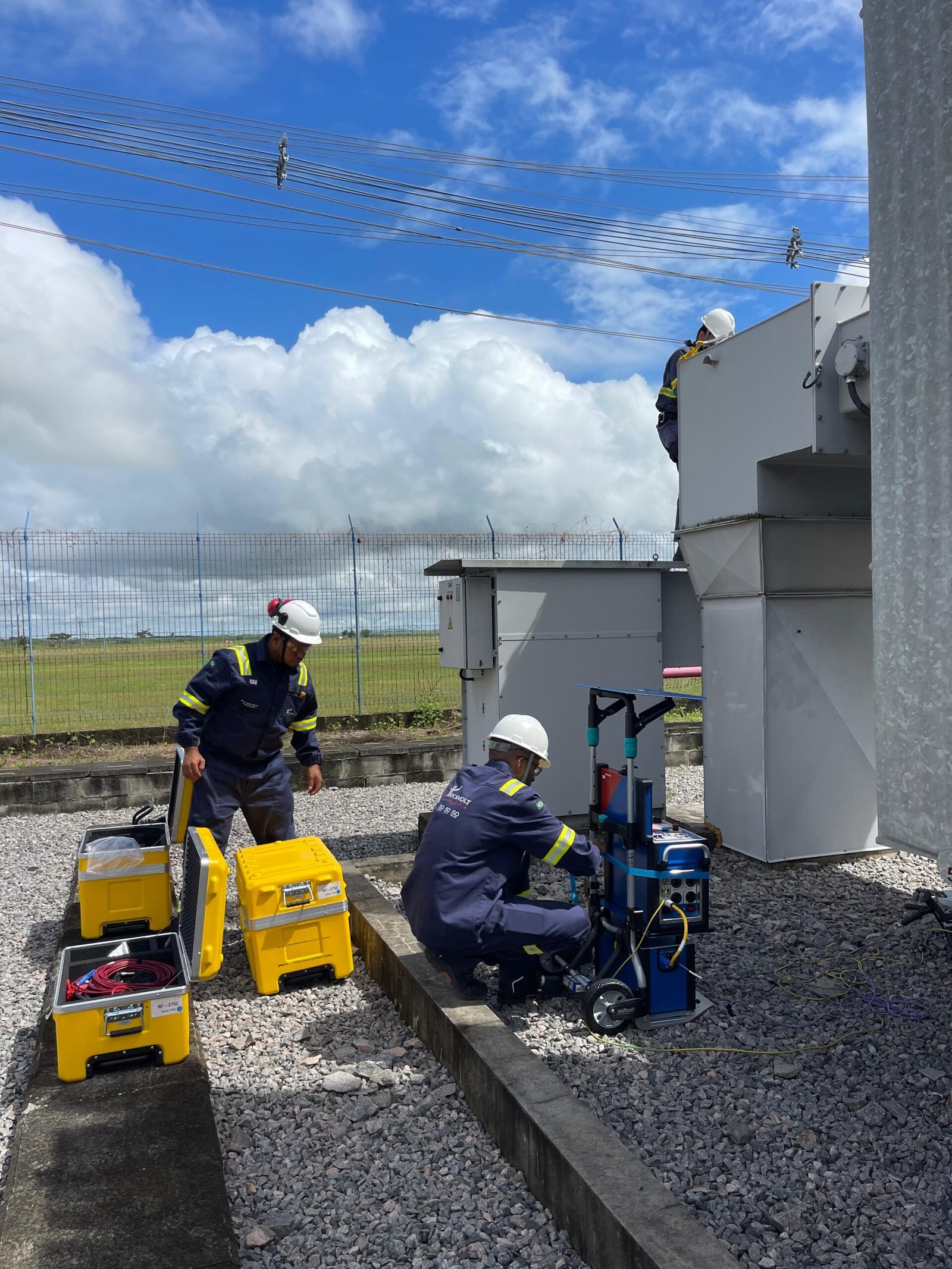
Protection is only as good as its measurements. Current transformers are verified for ratio, polarity, winding resistance, excitation (saturation) curve and burden – a CT that saturates during a real fault will blind the relay exactly when it is needed. Voltage transformers are verified for ratio and polarity. The CPC 100 performs these tests efficiently at the switchgear, with results compared against nameplate and coordination study assumptions.
Secondary injection – proving the relay
Secondary injection applies precision currents and voltages directly to the relay inputs, verifying: pickup values and timing of each enabled function (overcurrent, earth fault, differential, distance, voltage and frequency elements as applicable); characteristic curves against the coordination study; binary input and output logic; and target and event reporting. Settings as-found and as-left are documented, closing the loop between the protection study and the installed reality.
Primary injection – proving the chain
Primary injection drives real current through the primary circuit – bus, CTs, wiring and relay together – proving the complete measuring chain and trip path, including breaker operation. It is the definitive commissioning test for new switchgear and the conclusive verification after wiring modifications, per ANSI/NETA ATS.
Functional trip testing
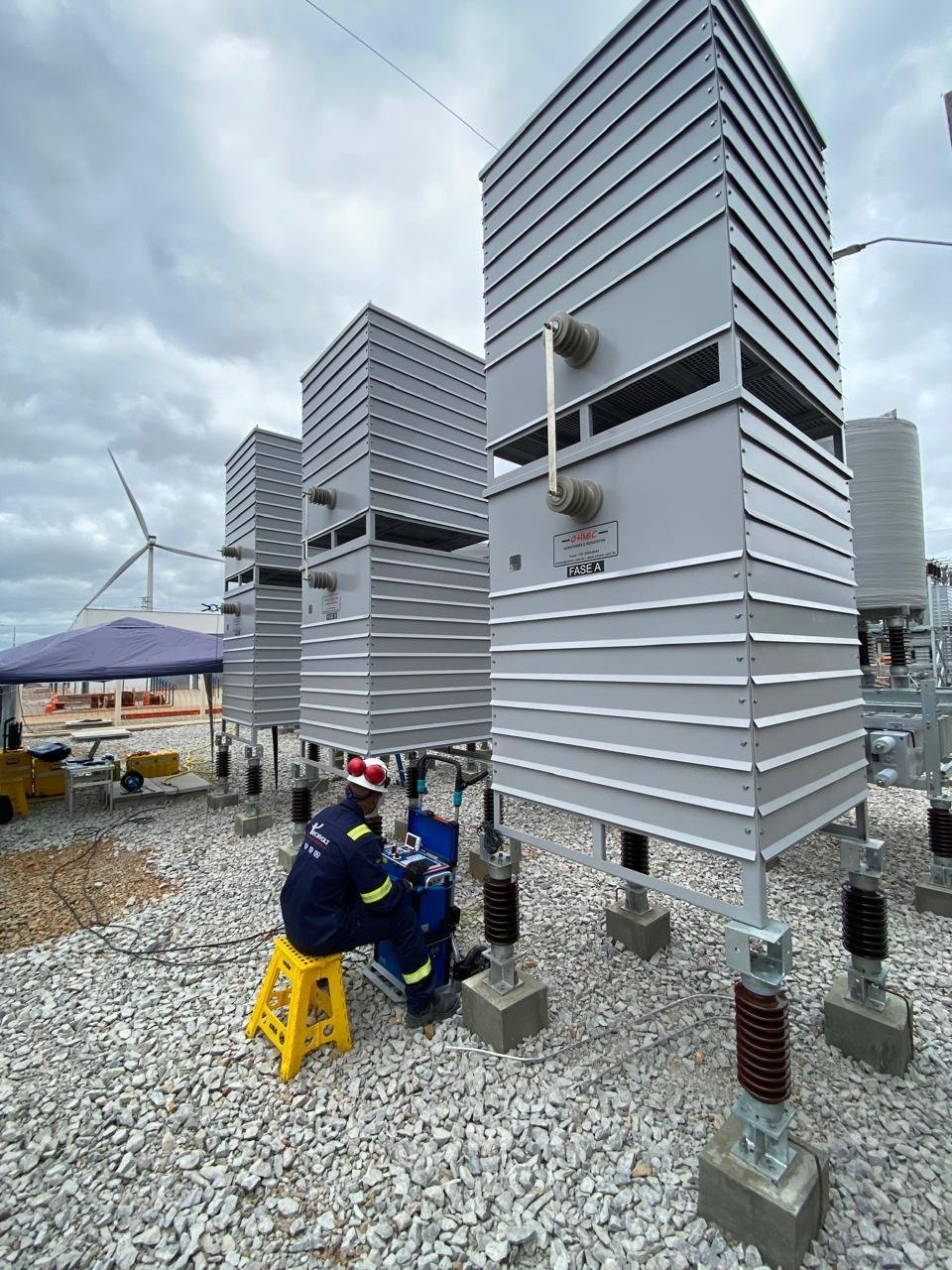
Every trip path is exercised: relay to lockout to breaker coil, intertripping and transfer schemes, breaker failure logic. On paper, these paths always work; in the field, a lifted wire or a mislabeled terminal is found on a significant share of first-time functional tests – which is exactly why the test exists.
When to test
Commissioning of new or retrofitted switchgear per ANSI/NETA ATS; periodic maintenance verification per ANSI/NETA MTS (commonly 3 to 6 year cycles by criticality); after setting changes driven by coordination study updates; and after protection misoperations, to distinguish relay, CT, wiring and breaker contributions.
What you receive
A protection test dossier: CT/VT test records, relay settings as-found/as-left with function-by-function results, primary injection and functional trip records, deviations flagged against the coordination study, and a prioritized punch list. The dossier is the evidence base for insurers, auditors and reliability engineers.
Why Tecnvolt
Tecnvolt has tested protection systems from industrial MV switchgear to 500 kV substation bays since 2012, always with the OMICRON CPC 100 platform – the same equipment standard used by U.S. NETA member firms. ISO 9001, ISO 14001 and ISO 45001 certified.
Frequently asked questions
Do you need the coordination study? Ideally yes – testing verifies the installed system against the intended settings. Without it, we document as-found settings and flag inconsistencies for engineering review.
Can testing be done live? Secondary injection requires the protected equipment isolated or bypassed under a safe switching plan; primary injection requires an outage of the bay under test.
Which relay types are covered? Electromechanical, static and numerical relays across manufacturers – the test methodology adapts to the technology.
About our U.S. transition
Tecnvolt Engenharia is a Brazilian company founded in 2012, currently in the process of establishing a U.S. company in Houston, Texas. During this transition we are receiving inquiries and scheduling future work. Request a quote / register interest